Siding Contractor in Hanover Park, IL. Installation, Replacement & Repair
Garcia's Exteriors is a family owned siding contractor working out of Hanover Park, Illinois. We do full-home siding replacement, storm damage siding repair, and new installs in vinyl. Licensed, fully insured, financing available, and backed by a 5-year workmanship warranty.

Do You Need Siding Repair or Full Replacement?
Not every siding problem is a re-side, and a contractor who tells you it is before looking behind a panel isn't looking. Here's how to read what your house is telling you.
Cracked or buckled panels, vinyl gets brittle with age and cracks in cold weather. A few cracked panels on one elevation is a repair, if the color can still be matched. Cracking across the whole south face means the material has aged out.
Soft spots when you press on the wall, this is the one that matters. Soft sheathing means water has been getting behind the siding, probably for years. No amount of new siding fixes rotted sheathing; it has to come off.
Rising heating bills with nothing else changed, often failed or missing house wrap behind the siding, which is only fixable during a replacement.
Peeling interior paint or wallpaper on an exterior wall, moisture is moving through the wall assembly from outside. That's a siding and weather barrier problem showing up indoors.
Uneven fading on the south and west faces, normal aging, not a failure. It matters because you cannot match it. Once fading is visible from the street, patching makes the repair look worse than the damage.
Panels loose or missing after a storm, check whether the nailing hem tore. If the hem is torn, the panel didn't come loose, it failed, and neighboring panels probably took the same stress.
We'll tell you which one you have. If it's a repair, we'll say so, we'd rather do a small job well and be the people you call in six years.
Siding Materials We Install
Vinyl Siding
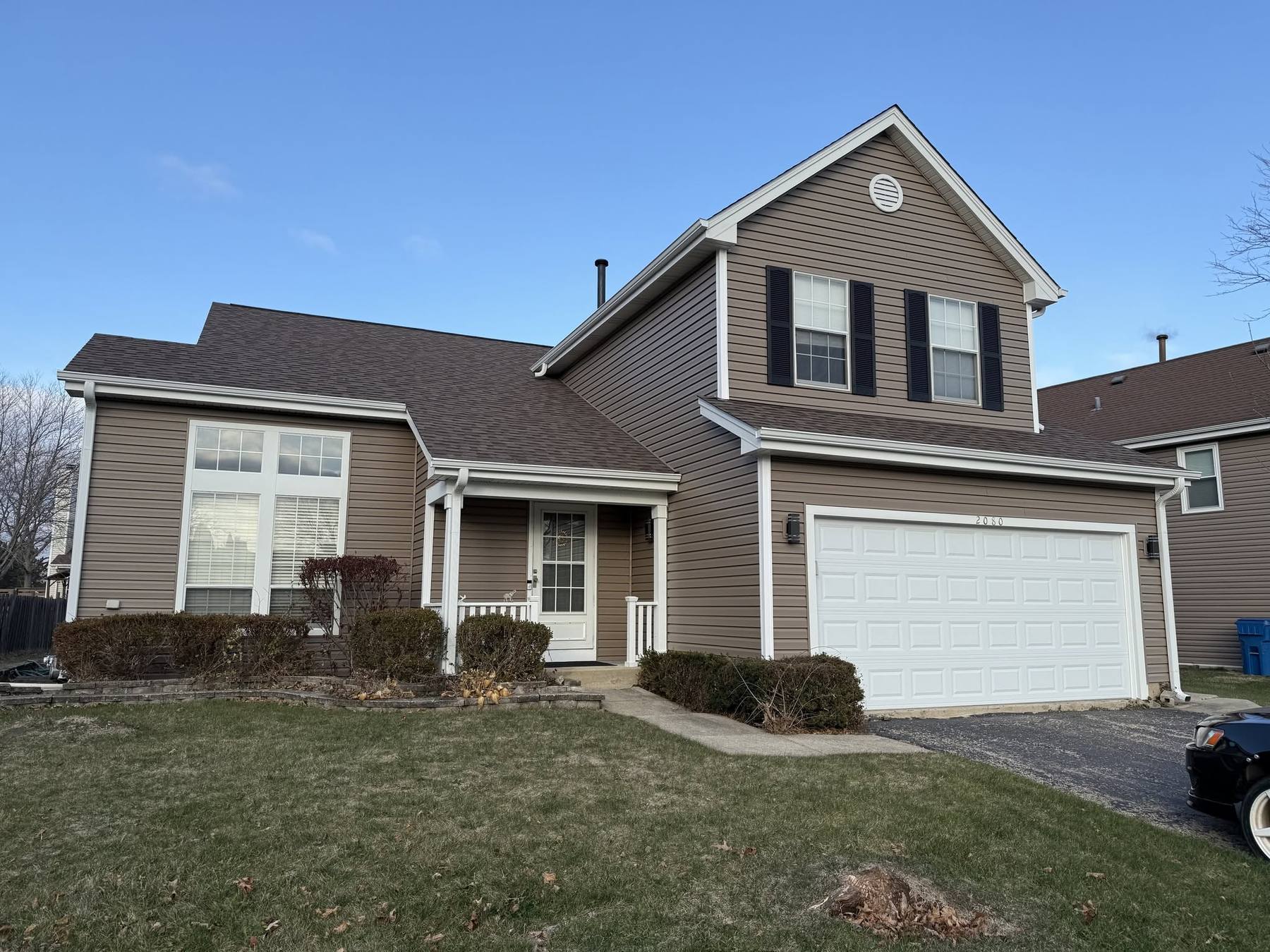
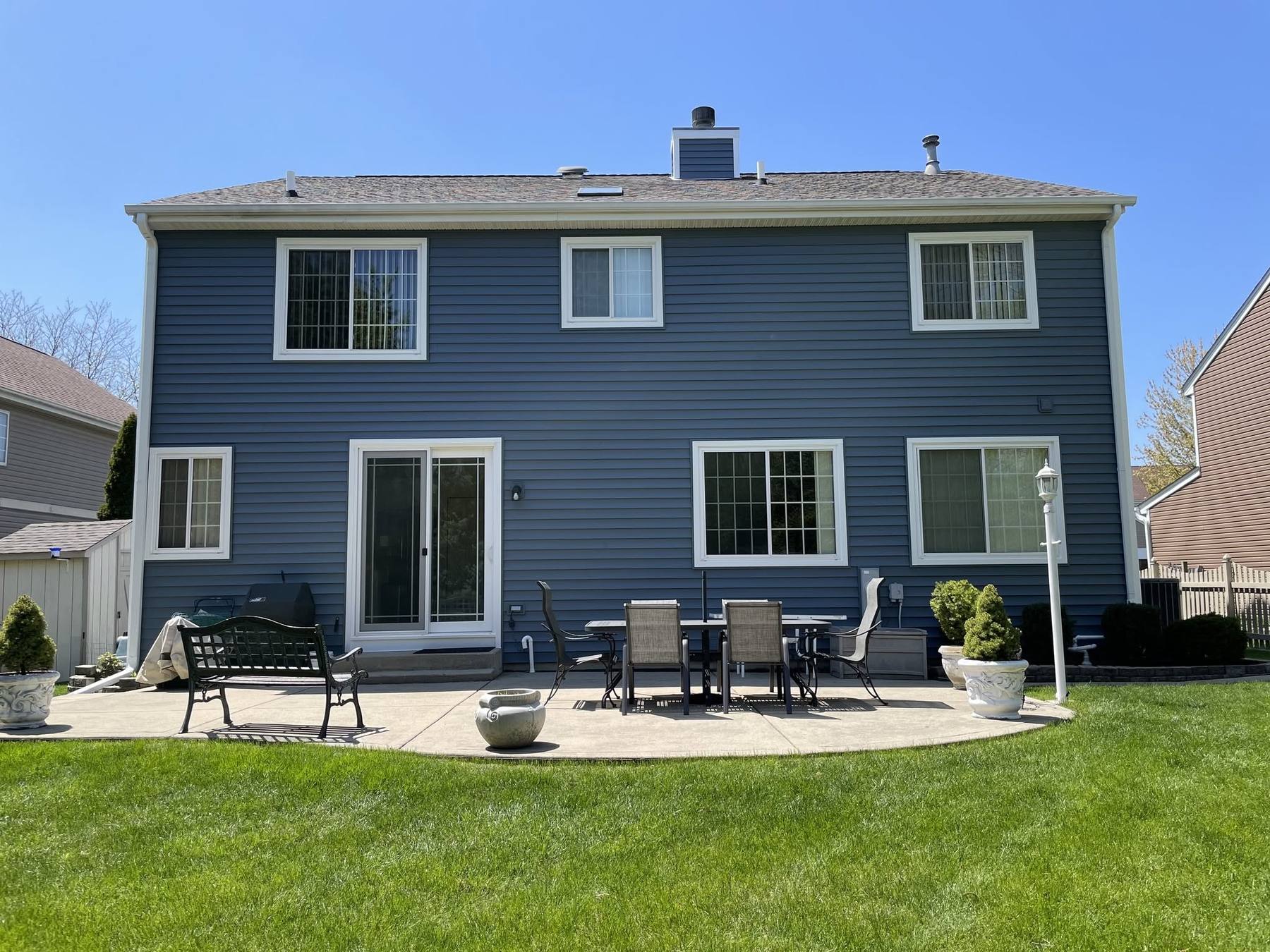
Vinyl siding is the most popular and cost-effective option in this area. Today's insulated, heavier-gauge panels resist cold cracking and hold color far better than older versions, lasting 20-40 years when installed correctly. It's paint-free and hoses clean. Downsides: hard impacts in deep cold can crack it, and dark colors in full sun may warp over time. The biggest factor in lifespan isn't panel quality, it's installation. Panels must be hung loosely to expand and contract with temperature swings; nailed too tight, they'll buckle within a year or two.
James Hardie Fiber Cement
Fiber cement (like James Hardie) blends cement, sand, and cellulose fiber. It won't rot, burn, or attract woodpeckers, and it holds paint far longer than wood, plus it beats vinyl in hail resistance, which matters here in Illinois. Hardie's ColorPlus finish is factory-baked rather than field-painted, backed by a stronger color warranty. It's a premium product with premium installation demands: heavy boards, specific blades and dust control for cutting, and precise fastening and clearance. Poor installation shows up quickly here too, usually as caulk failure at the butt joints.
LP SmartSide Engineered Wood
Treated engineered wood. It gives you real wood grain and a deeper shadow
line than vinyl, at a weight and price between vinyl and fiber cement. It cuts and handles like lumber, so trim details and gable work come out cleaner, and it takes paint well. Good choice if you want the look of wood without the maintenance cycle of cedar. It does need its cut edges sealed and its clearances respected, engineered wood in contact with grade or standing water will fail there first.
Board & Batten and Stone Accents
Vertical board and batten on gables, entries or a full front elevation is the
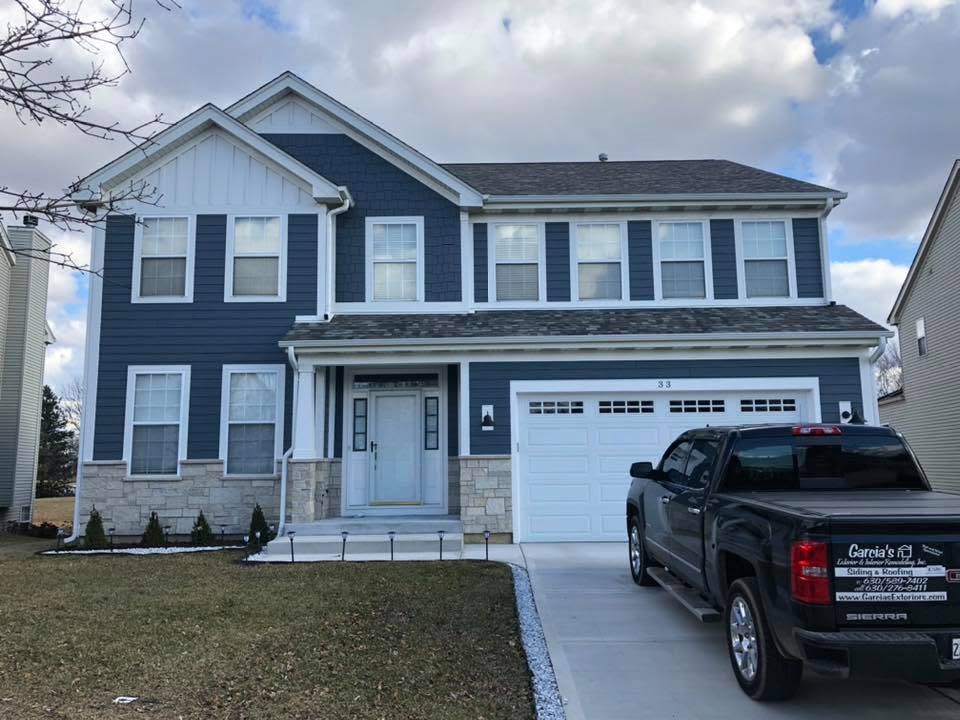
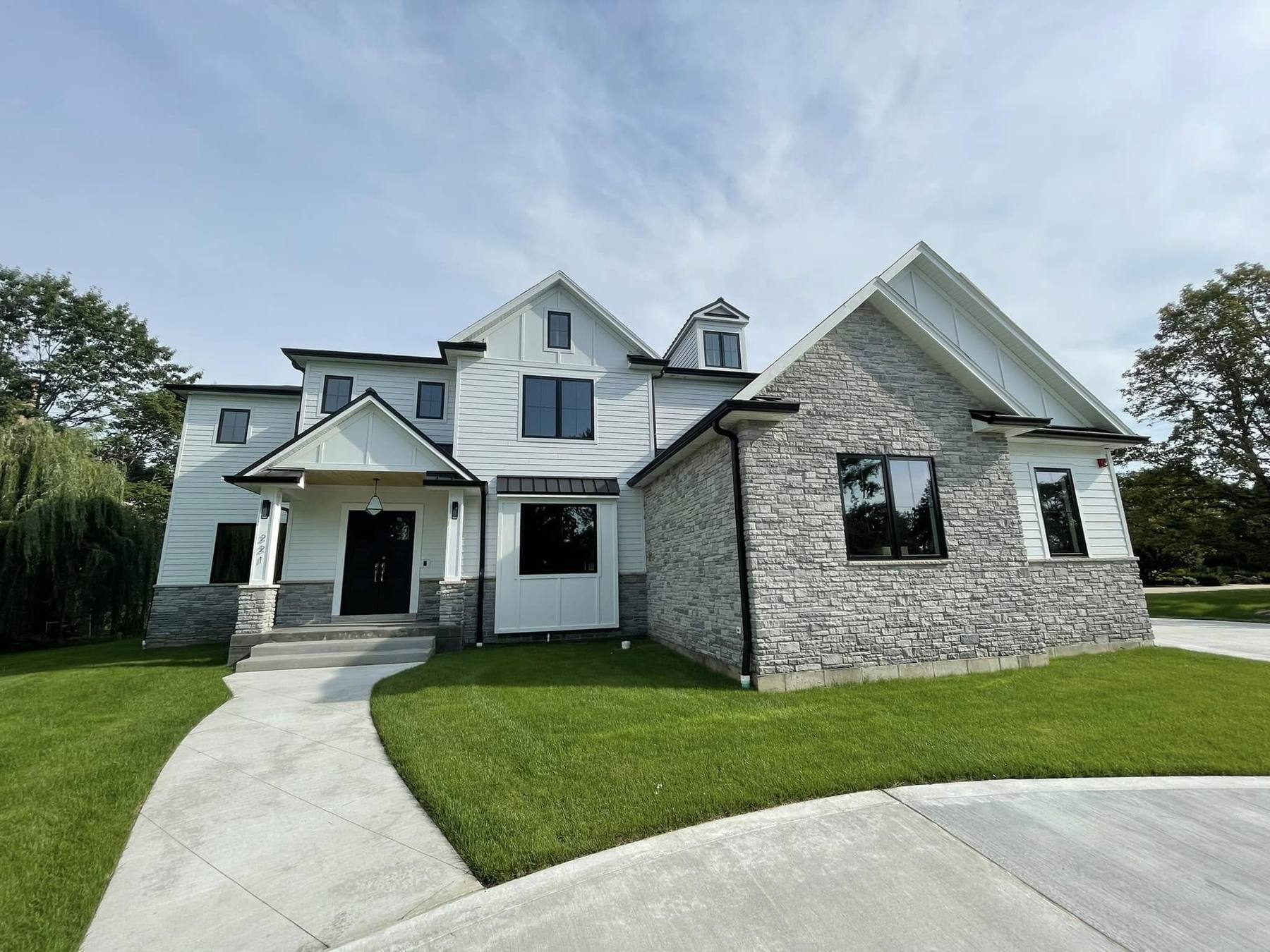
single fastest way to change how a house reads from the street, and it's available in vinyl, fiber cement and engineered wood. Paired with a stone or limestone veneer wainscot it turns a plain 1990s two-story into something that looks designed. This is where most of our before-and-after photos come from, and it's usually a smaller upgrade than people assume, accents cover a fraction of the elevation.

See Your New Siding on Your Actual House
Choosing siding from a four-inch sample is how people end up with a color they don't love on a wall they look at every day. Our 3D design rendering puts the material and color on your actual house, so you see the whole elevation before anything is ordered, siding profile and color, trim, roof, windows and any stone accent, together.
It also produces accurate measurements and a project layout the crew works from during installation, which is part of why our estimates hold.
Comparing Our Quote to Someone Else's
You're going to get other bids. You should. But two exterior quotes are almost never the same scope, and the grand total is the least useful line to compare.
One contractor may have more linear feet of wall in their takeoff, their price will be higher, and their number may be the accurate one. One may be quoting a lower-grade panel, their price will be lower, and you'll find out why in eight years. Every contractor carries different overhead and prices differently.
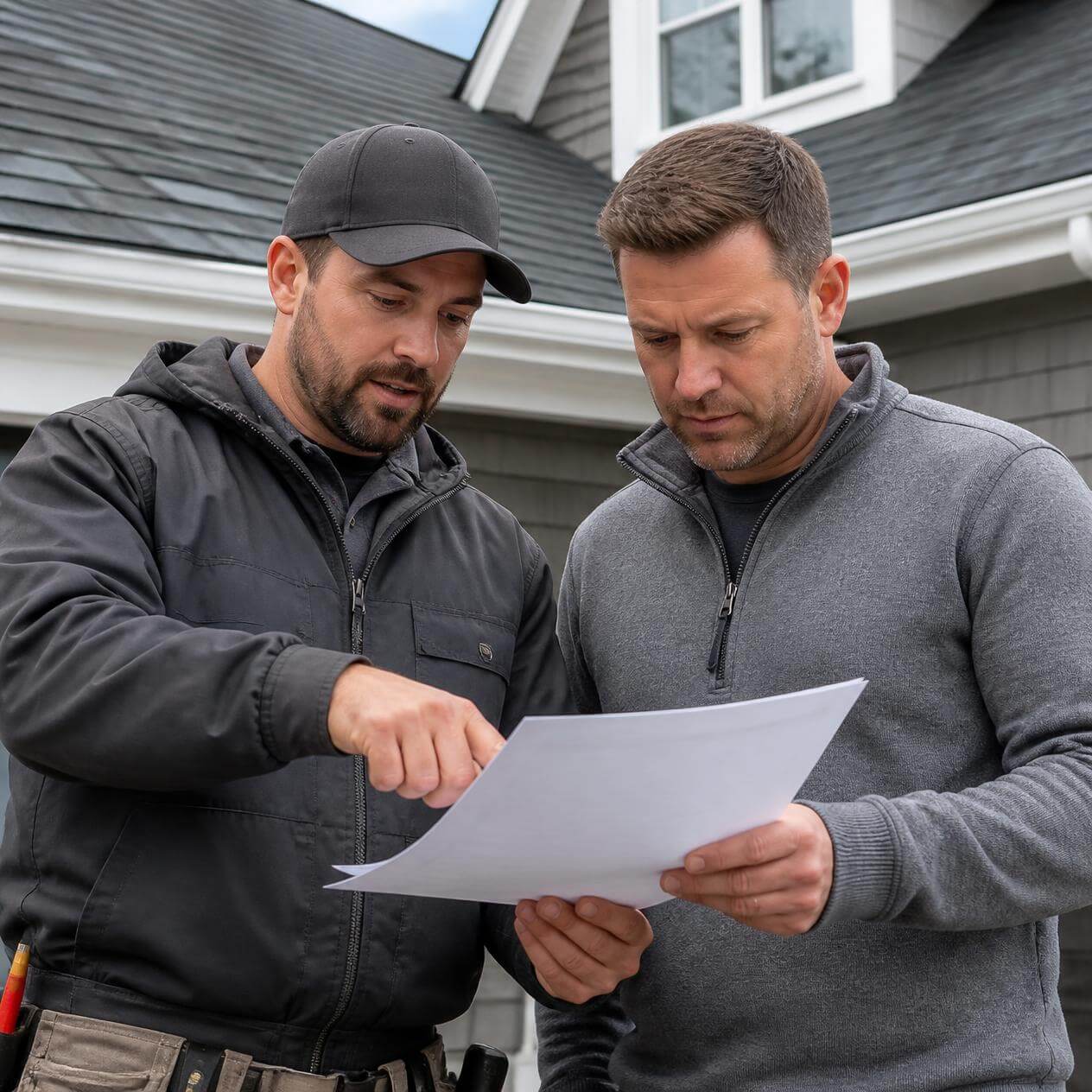
Bring us the other quote. Juan will go through it with you line by line and give you a straight comparison, where the scopes differ, what's included inone and not the other, and whether the price gap is real or just a difference in what's being counted. We'd rather you understand what you're buying than win on a number you can't evaluate.
How We Replace Siding
1. Estimate & Material Selection
We measure, photograph the elevations, and bring samples out so you can see color in daylight against your roof and trim rather than under store lights. Written estimate with materials and labor separated.
2. Tear-Off & Inspection
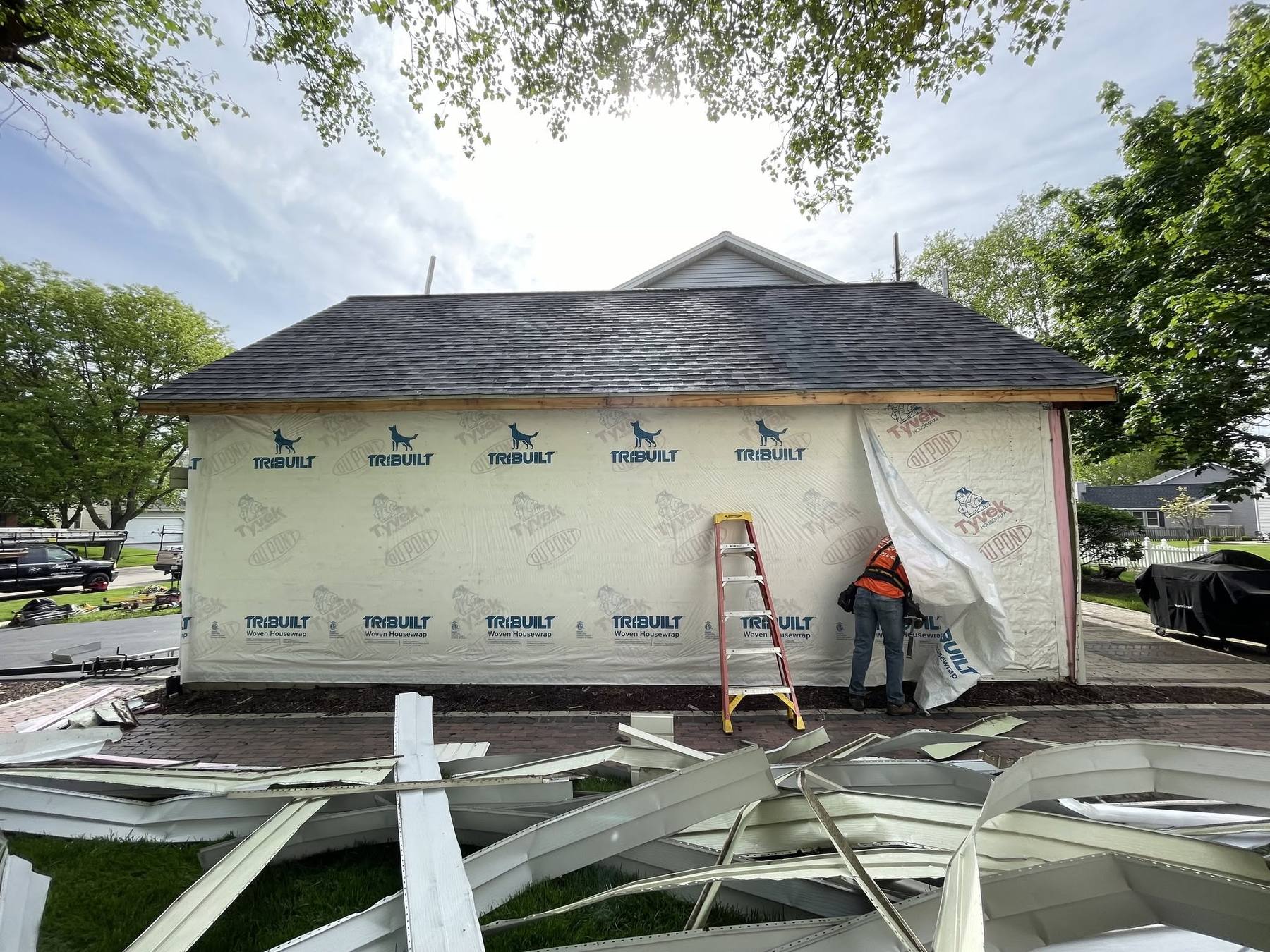
Old siding comes off and the wall gets looked at. This is the moment that matters, sheathing condition, house wrap, window and door flashing, and anything that's been quietly wet. If we find rot, you get a photo and a price that day, before we cover anything back up.
3. Installation
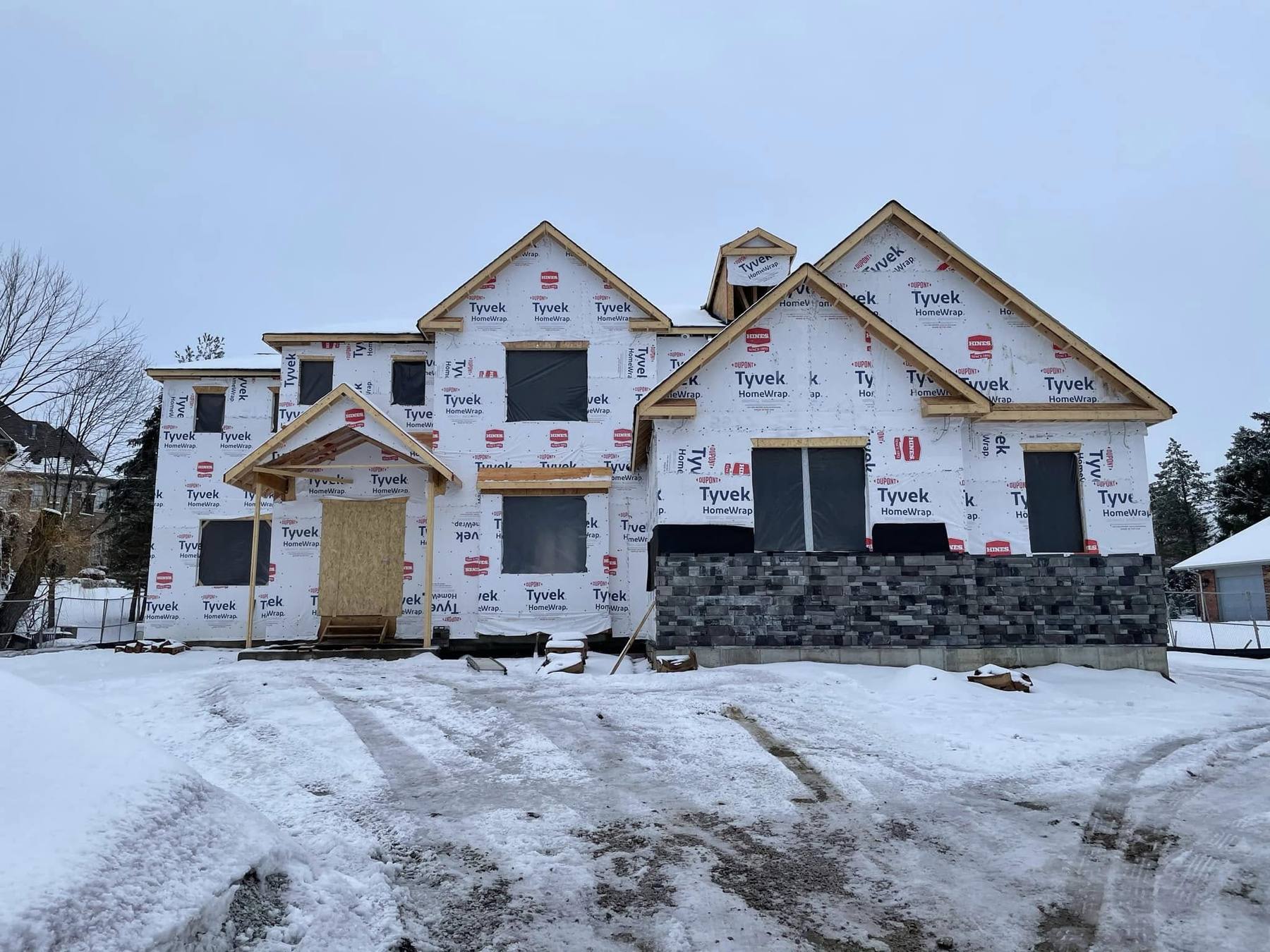
New house wrap, properly lapped and taped, then flashing at every window, door and penetration. Siding goes on with the right fastening and expansion clearance for the material.
4. Cleanup & Walkthrough
Site cleared daily and a magnetic nail sweep across the drive and lawn. We walk every elevation with you before the crew leaves, and your 5-year workmanship warranty starts that day.
Doing Windows With Your Siding
The siding comes off around every window opening anyway. That's the one time the flashing, the sill and the trim are fully accessible, which makes it the cheapest and best time to replace the windows themselves. Do them separately and you pay for a second mobilization, and someone details that opening twice.
Not everyone needs both. But if your windows are original to a 1990s house and you're re-siding, ask us to price it together before you decide.
Siding Projects in Hanover Park and Nearby
Our Warranty and Financing
Your siding comes with a manufacturer warranty on the material, fade,
defect, and in fiber cement's case the factory finish. That warranty covers the product, not the installation, and the distinction is where most siding disputes start.
Our 5-year workmanship warranty covers our work: the fastening, the flashing, the trim and corner details, the house wrap. In writing at the final walkthrough.
Financing is available on siding projects, monthly payments instead of one bill, and you can apply before the estimate.
Siding Questions We Get Asked
Most full-home siding replacements in this area vary, once material is on site. Larger homes, multiple stories, or sheathing repairs found after tear-off add time, and we'll tell you the day we find it, not at the end. Single-elevation work and repairs are usually a day.
Twenty to forty years installed correctly in this climate. What shortens it is freeze-thaw cycling and installation technique, vinyl has to be hung loose enough to expand and contract, and a crew that nails it tight will have it buckling within a couple of summers. South-facing elevations fade first.
It depends on square footage, material, number of stories, and whether the sheathing underneath needs repair once the old siding is off. Vinyl is the most cost-effective, engineered wood sits in the middle, and fiber cement is the premium. We give a written estimate with materials and labor broken out so you can actually compare it against someone else's. Free, no obligation.
A composite of cement, sand and cellulose fiber, sold most often as James Hardie. It doesn't rot or burn, holds paint far longer than wood, and stands up to hail better than vinyl. It's heavier and more labor-intensive to install, which is why it costs more per square foot, you're paying for the install as much as the board.
A vertical pattern, wide boards with narrow strips, the battens, covering the seams. Available in vinyl, fiber cement and engineered wood. Most often used on gables, entries and front elevations rather than a whole house, and it's the fastest way to change how a house reads from the street.
Ask for the license number and proof of insurance, in writing. Ask whether the workmanship warranty is separate from the manufacturer warranty and how long it runs. Ask what happens if rotted sheathing turns up after tear-off and how that gets priced. Ask who is actually on site each day. And ask how they protect the landscaping and clean up. Anyone who won't answer those in writing shouldn't get the job.
Get a Free Siding Estimate
We'll come look at the house, tell you whether you're looking at a repair or
a replacement, and bring samples so you can see the material in daylight.
Free, no obligation.